Introduction and Chapter 1- including a good map of Acts locations and a current map of the area as well
Welcome to the Bible study of Acts!
Chapter 1
Note 1: This
Bible study is being created specifically for a friend of mine. It is not meant
as an exhaustive study of the book of Acts. Please do your own research, using
the commentary links as a starting point, for a better understanding of the
book of Acts and other books of the Bible. Thank you for your dedication to studying the
word of God!
Note 2: All Bible
verse citations are from NKJV (New King James Version) unless otherwise stated.
Note 3: # This
symbol will be used for any information from Dr. Nunnally’s “A Commentary on the Book of Acts”
(Source info below). This Bible study is heavily based on Dr. Nunnally’s work. I
have not yet discovered if he has published his book, but I will post a link for
his work if I find out that he has published it. Feel free to comment on this
blog if you discover his published book (if it’s published) before I do!
- All notes that have this or no symbol in front of them are
my interpretations of scripture.
*NIV Zondervan study Bible
+ other source (cited below)
Introduction to Acts:
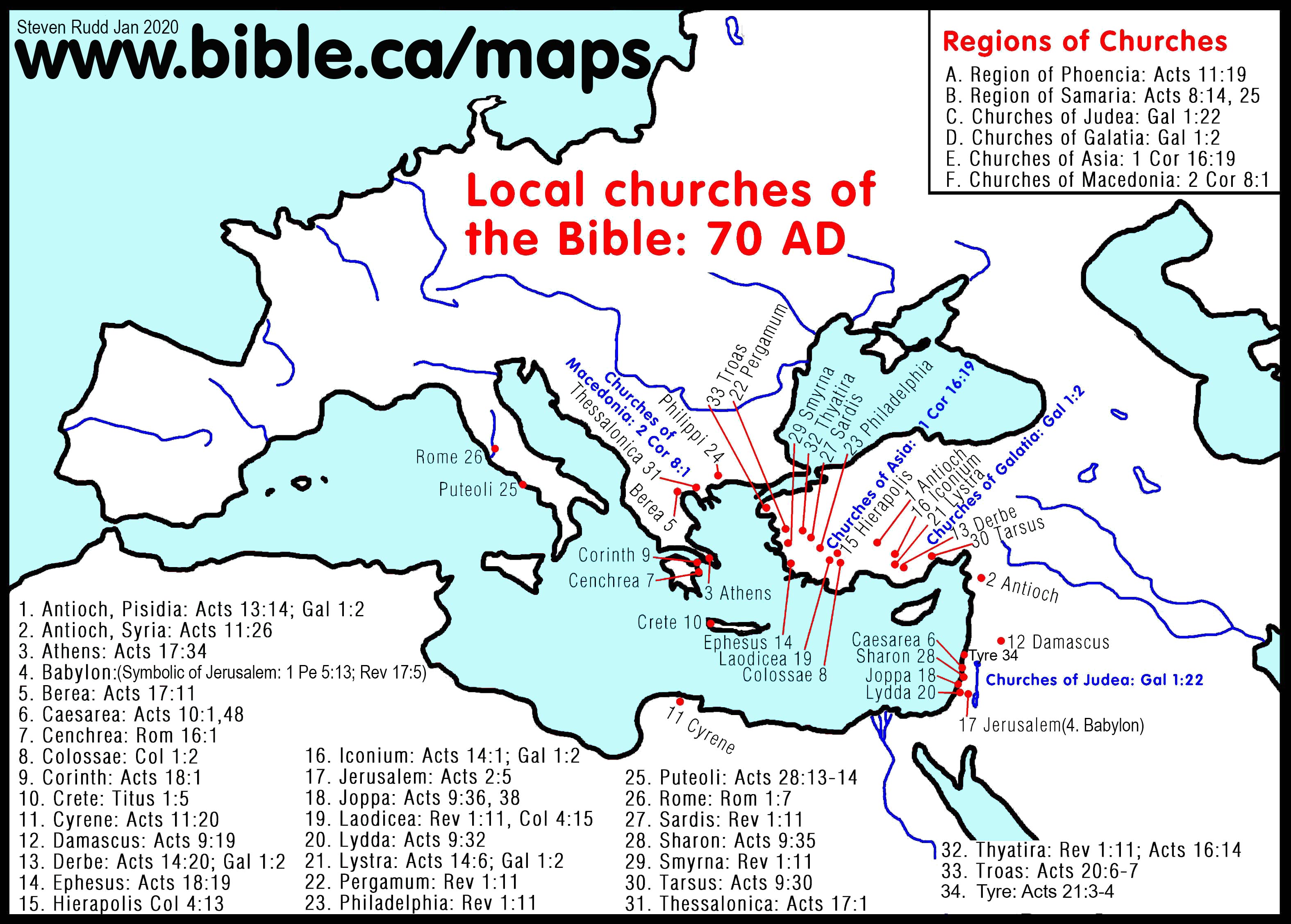
I found an excellent map of the ancient locations described in the book of Acts. I also pulled up a simple Google map (thank you, Google!) that shows the same area with present day names and country locations. Feel free to reference these maps throughout the course of this study. Not every city mentioned is on this map, but most of them are.
I found an excellent map of the ancient locations described in the book of Acts. I also pulled up a simple Google map (thank you, Google!) that shows the same area with present day names and country locations. Feel free to reference these maps throughout the course of this study. Not every city mentioned is on this map, but most of them are.
When was it written?
#1 “Many scholars
have been led to suggest a date for Luke-Acts in the early sixties.” The date:
AD 62 or AD 63 will be assumed for this study.
Who wrote it?
Luke wrote both the book of Luke, and the book of Acts. It
is important to note that Luke was a doctor, therefore some more detailed and
sometimes gruesome facts are shared in the books of Luke and Acts.
Why was it written?
#2 Acts was
written as a sequel to the book of Luke.
- Who was Theophilus?
#3 It is not certain who Theophilus
was, but we can be sure he was a Roman of high status.
Theophilus was most likely Luke’s “patron,” meaning that Theophilus paid for Luke to research and write the books Luke and Acts
Verses 1-3: Luke
is summarizing his previous book (Luke) to his reader (Theophilus). If you have never read the book of
Luke, I encourage you to do so in order to be better prepared for reading the
book of Acts.
Verse 4: This is
a reference to Luke
24:49 (BibleGateway.com) , where Jesus is about to ascend into heaven and
he asks the disciples to wait in Jerusalem for the gift of the Holy Spirit.
Verse 5: This is
a reference to Luke 3:16
(BibleGateway.com) , when Jesus says that his followers will be baptized with
in the Holy Spirit.
Verse 6: The
disciples had hoped that Jesus would give the Jews their kingdom back, that
they would be able to rule themselves, independent of the Romans. However,
Jesus allowed the Jews to continue living under the authority of the Roman empire.
God always gives his people a choice to turn their hearts to follow him, as the
Jews were given the chance to follow Jesus. The Jews chose to crucify Jesus,
therefore God could not allow the Jews to be rewarded for that action by giving
them leadership over their kingdom.
Verse 11: The
angels are referring to a time Christians call “the resurrection,” or “the
second coming” of Jesus. There will come a time when Jesus will return to
Earth, bringing the world to a final end and judgement. After that, all of the
enemies of God will be in Hell. Those who have chosen to follow Jesus will be
in Heaven, experiencing everlasting joy.
Verse 13: These
were the remaining 11 disciples (Judas Iscariot killed himself after he
betrayed Jesus).
Verse 15: Luke is
using the word “disciples” to refer to the entire group of committed followers
of Christ at this time, not just the 11.
Verse 16: According
to Benson’s Commentary, I believe it is clear that Luke is referring to the
following words which King David spoke: Psalm
69:25 (BibleGateway.com), and Psalm
109:8 (BibleGateway.com).
Verse 16: According to Benson’s
Commentary, I believe it is clear that Luke is referring to the following words
which King David spoke: Psalm
69:25 (BibleGateway.com), and Psalm
109:8 (BibleGateway.com).
Verse 18: + This verse is
somewhat confusing, because the translators chose to use the word “bought”
instead of “acquired, or got possession of a field.”
- Look at Matthew
27:3-10 (BibleGateway.com)
#4 It might be interesting to note that Judas did not actually “hang”
himself. In fact, he most likely killed himself with a spear (by falling on
it). Hanging was not a custom in Jewish history. If someone were to kill himself,
he would fall on a sword, spear, or stake (sharpened piece of wood).
Verse 25: “that he might go to
his own place,” essentially means, “that he may be damned (go to hell).” Judas
betrayed the son of God, Jesus, to the chief priests. Jesus was tortured and
crucified, therefore the disciples accepted the fact that Judas deserved to die
and go to hell. Every person who sins deserves to go to hell, but Jesus died so
that our sins may be forgiven and we may go to heaven if we accept that Jesus
is our Lord (master, King).
Verse 26: “cast lots” means to
throw dice. For example, if the die fell on the numbers 1-3, they may have
chosen Joseph, but if the die fell on the numbers 4-6, they may have chosen
Matthias. Casting lots (throwing dice) was a very common way of making
decisions, although the disciples had also prayed concerning this decision and
believed that God directed the toss of the dice also.
- Matthias becomes the new 12th disciple, taking Judas’s
place.
Sources (listed in order of appearance):
W.E. Nunnally. A Commentary on the Book of Acts, 2008, Evangel
University, 2008, Springfield, Missouri, 2017.
#1: Pg. 16, paragraph 2
#2: Pg. 25, paragraph 3
Verse 18: http://biblehub.com/commentaries/acts/1-18.htm
(Ellicott’s Commentary for English
Readers)
#3: Pg. 34, paragraphs 2-3
#4: Pg. 54-55, last paragraph, continued on page 55
Comments
Post a Comment